The Specifics of Vinyl Mastering
When an artist or a label hires a mastering engineer to finalize a track, an EP, or an album, it is very common to adapt the mastering to the different distribution formats: streaming, CD, and vinyl. Each format has its own characteristics. It is therefore necessary to technically adjust the processing applied in order to achieve an optimal result, perfectly suited to the medium,
especially for vinyl.
Vinyl, a Physical and Analog Medium
Mastering intended for vinyl is more specific than mastering for digital formats.
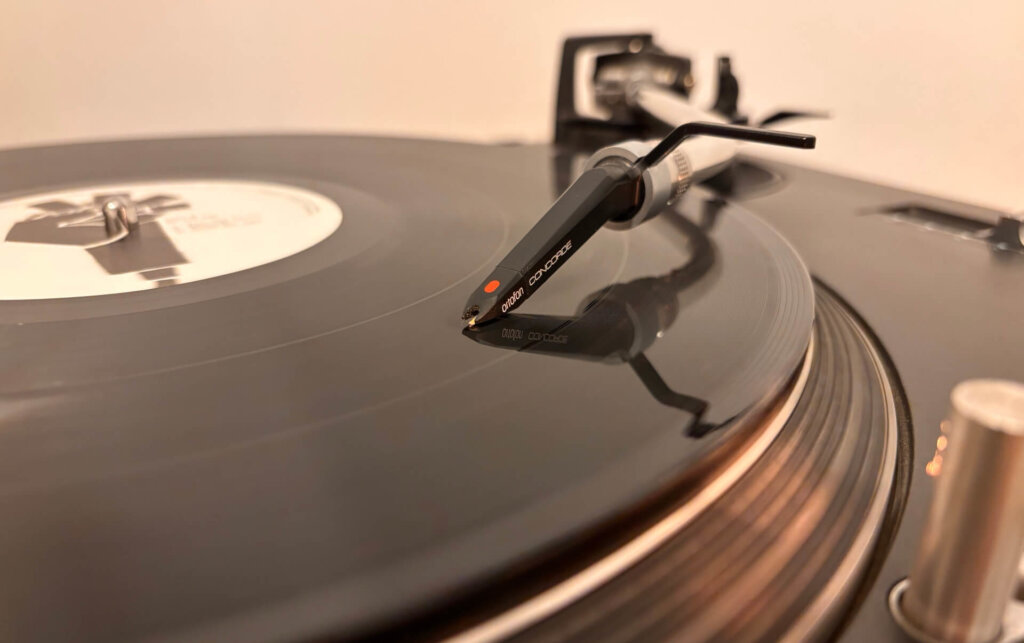
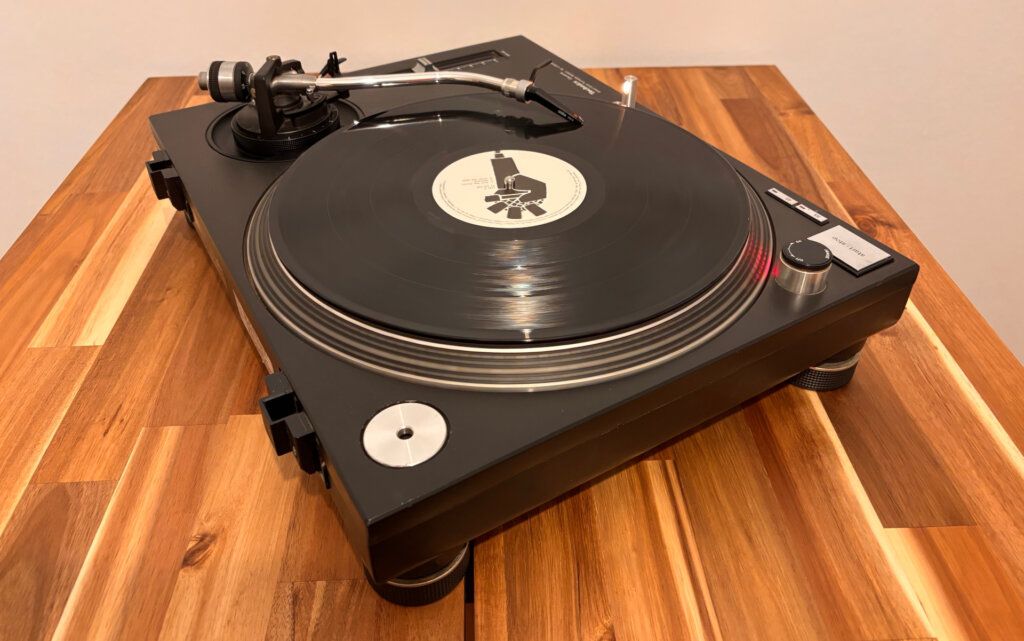
Indeed, vinyl is a physical and analog medium, engraved into a material (the lacquer) and read mechanically by a stylus (the cartridge of the turntable).
This particularity requires a real adaptation of the audio processing.
From this point on, several factors must be taken into account, as certain audio treatments can have a direct impact on the quality of the cut.
Level, Clipping, and Limiting at the End of the Chain
Loudness, stereo width, and the use of clipping and limiting are key factors in vinyl cutting.
The louder and wider a signal is, the more space the groove will occupy on the disc (groove spacing). This constraint can have significant consequences during pressing, particularly from a financial standpoint, if it requires adding an extra disc to contain the entirety of an album or EP.
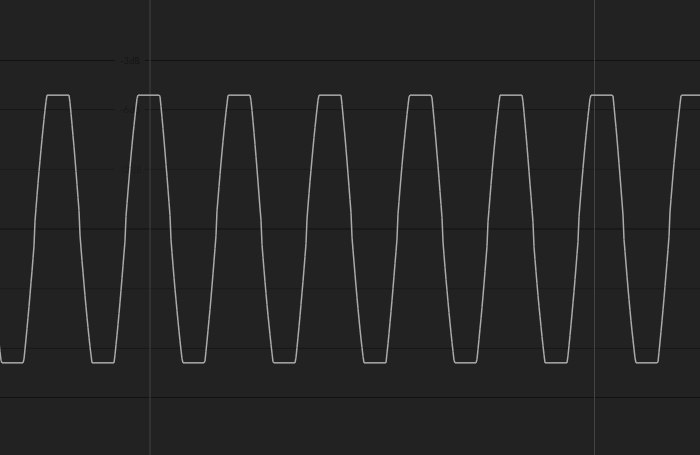
Clipping tends to flatten the peaks of the signal, create very abrupt angles, and turn natural transients into “square” shapes.
Limiting, on the other hand, crushes the micro-dynamics, increases the average energy of the signal, and makes it constantly feel “full,” which forces the groove to remain wide at all times.
These characteristics have a direct impact on the cutting process, and therefore on the movement of the playback stylus, with audible consequences: harsh highs, unstable stereo image, distortion in the high frequencies (especially on sibilance), and a loss of definition.
For an optimal cut, it is essential to preserve breathing space, dynamic contrasts, quieter passages, and natural transients.
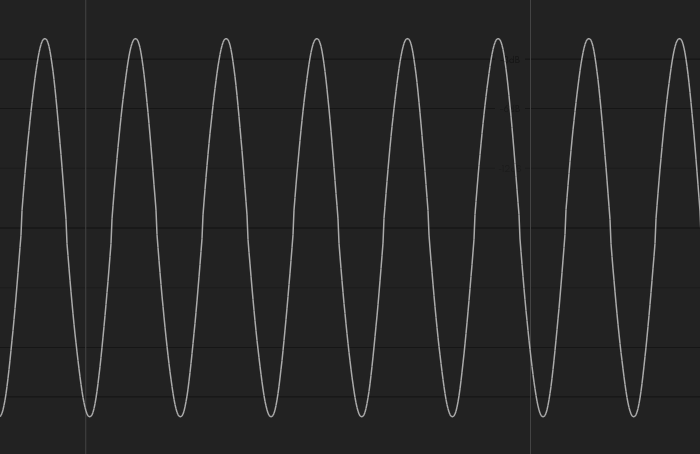
Signal without clipping
Signal with clipping
Delivering a Master Intended for Vinyl Cutting
A mastering engineer in charge of adapting your music for vinyl will make the necessary decisions to obtain audio specifically shaped for an optimal cut, while faithfully respecting the artistic intent of the work as it was conceived, produced, and mixed.
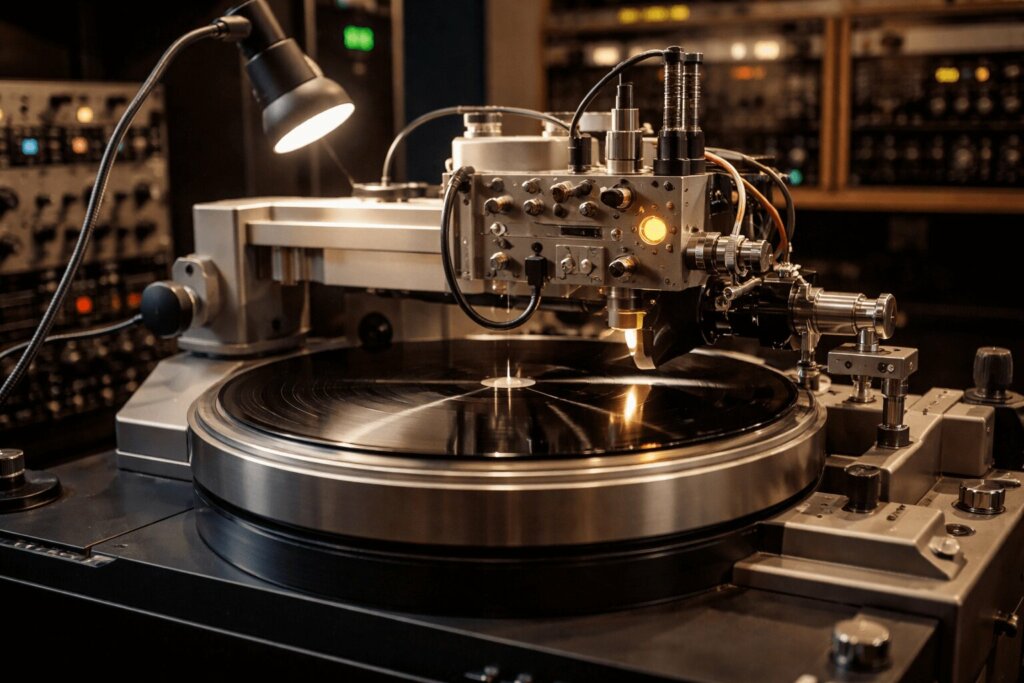
This result is then handed over to a cutting engineer, whose role is to transform the audio signal into a physical groove engraved onto a master disc.
This work requires constant, adaptive, real-time attention throughout the cutting process in order to obtain a master disc that is perfectly suitable for pressing.
It is therefore essential to anticipate this stage by making the cutting engineer’s job as easy as possible, by preparing a vinyl-adapted master and providing a technical sheet containing the necessary information about certain aspects of the music.
Vinyl Mastering, in Summary
Choosing a vinyl pressing requires true expertise at the mastering stage.
Certain technical decisions must be made in order to adapt the audio to a physical and analog medium, while fully preserving the artistic intent.
The goal is to achieve a sonic result that is faithful — or even identical — to the original work, while respecting the constraints specific to vinyl.
For any further information regarding vinyl mastering, contact Cerky Studio